
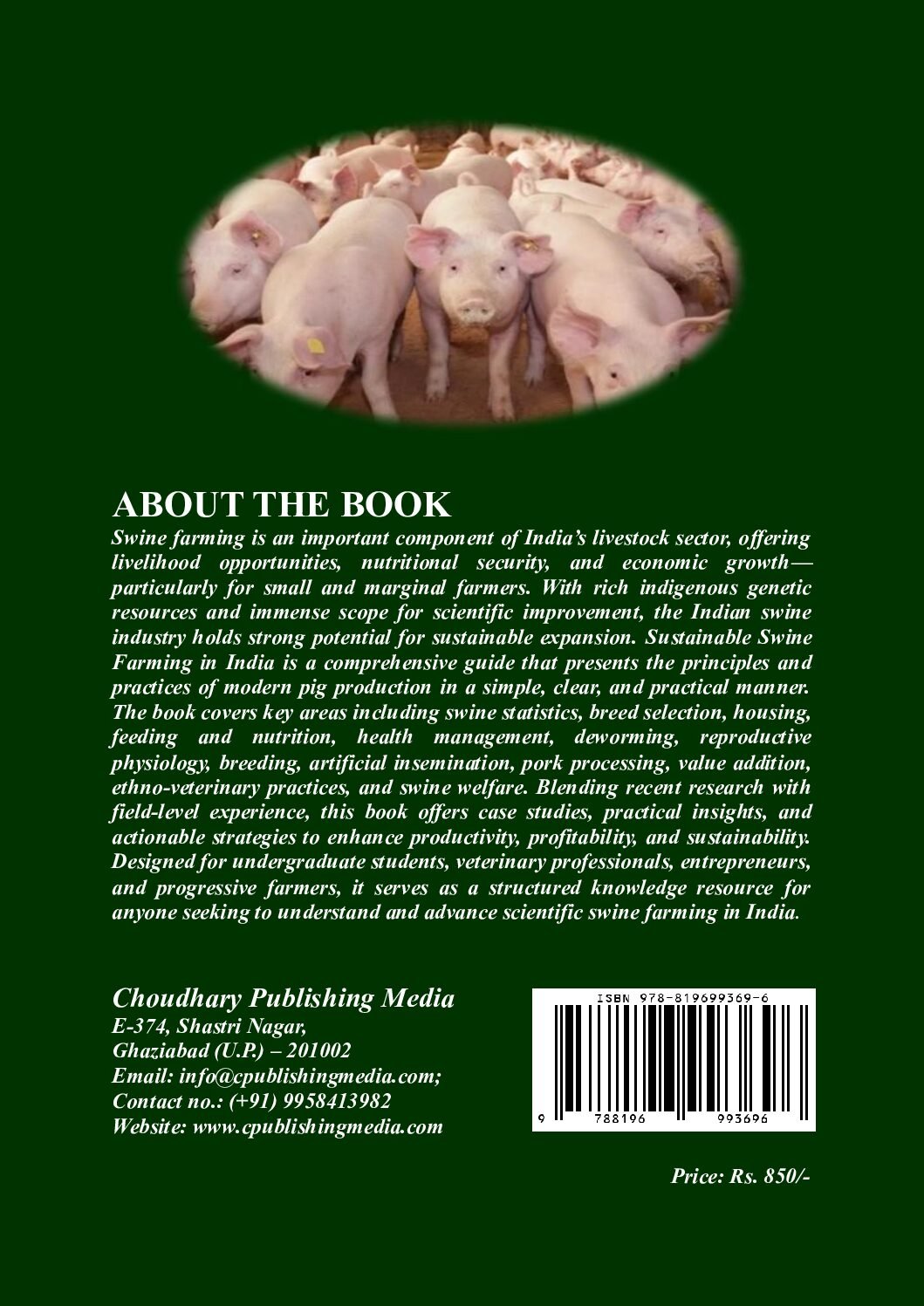
Swine farming is a crucial aspect of the global food industry, providing a significant source of protein worldwide. It has been a part of human civilization for thousands of years, with evidence of pig domestication dating back to around 7,000 BC. Despite its long history, pig farming has continued to evolve over the years, with new technologies, management practices, and breeding techniques emerging to improve productivity and sustainability. India is basically a rural oriented and agriculture-based country with around 70% rural population. Livestock sector is a vital source of economic assistance to agriculture and greatly contributes to national income. Today, pig farming is a complex and multifaceted industry, with a range of production systems, breeds, and management practices that farmers can adopt. It also plays a significant role in the global economy, with pork being the most widely consumed meat in the world. As such, it is essential to understand the intricacies of pig farming, its challenges, and the best practices that can ensure its sustainability. However, the commercial pig industry in India provides economic opportunities for farmers, entrepreneurs, and rural communities. It creates employment in various stages of the value chain, including rearing, processing, and marketing of pork products. As the country has tremendous potentiality of improvement of pig production through scientific management coupled with adoption of advanced technologies can improve productivity, feed efficiency, and disease management, making pig farming more profitable and sustainable. As per the 20th livestock census pig population in India was 9.06 million in 2019, Swine sector showed a decrease of 12.03 % population over 19th livestock census of 2012. India is bestowed with 15 indigenous (Registered) swine breeds, around 79% being indigenous or non-descript and nearly 50% of pigs are spread in North-eastern states, with Assam, Jharkhand and Meghalaya holding significant, increasing population. These breeds are recognized for their unique characteristics.This book “Sustainable Swine Farming in India” includes 29 chapters and provides a comprehensive information to pig farming, covering various aspects such as Statistic of swine, breed selection, genetic resources, housing and infrastructure, feeding and nutrition, deworming, common swine diseases, health management, reproductive physiology, reproduction, breeding, artificial insemination, and overall management practices. It also includes information on pork processing, value edition ethno-veterinary practices and swine welfare etc. Attempt has been made to complete this manuscript on Swine Farming in most simple, clear and talking language so that the contents could be easily followed by the readers, it is a step towards recent researches and advances in Sustainable swine farming. Moreover, the case studies, real-life examples, and useful tips from experienced pig farmers can provide valuable insights and practical knowledge. However, it’s important for pig farmers/ users to assess the suitability of different techniques based on their specific farming conditions, local regulations, and market demands.
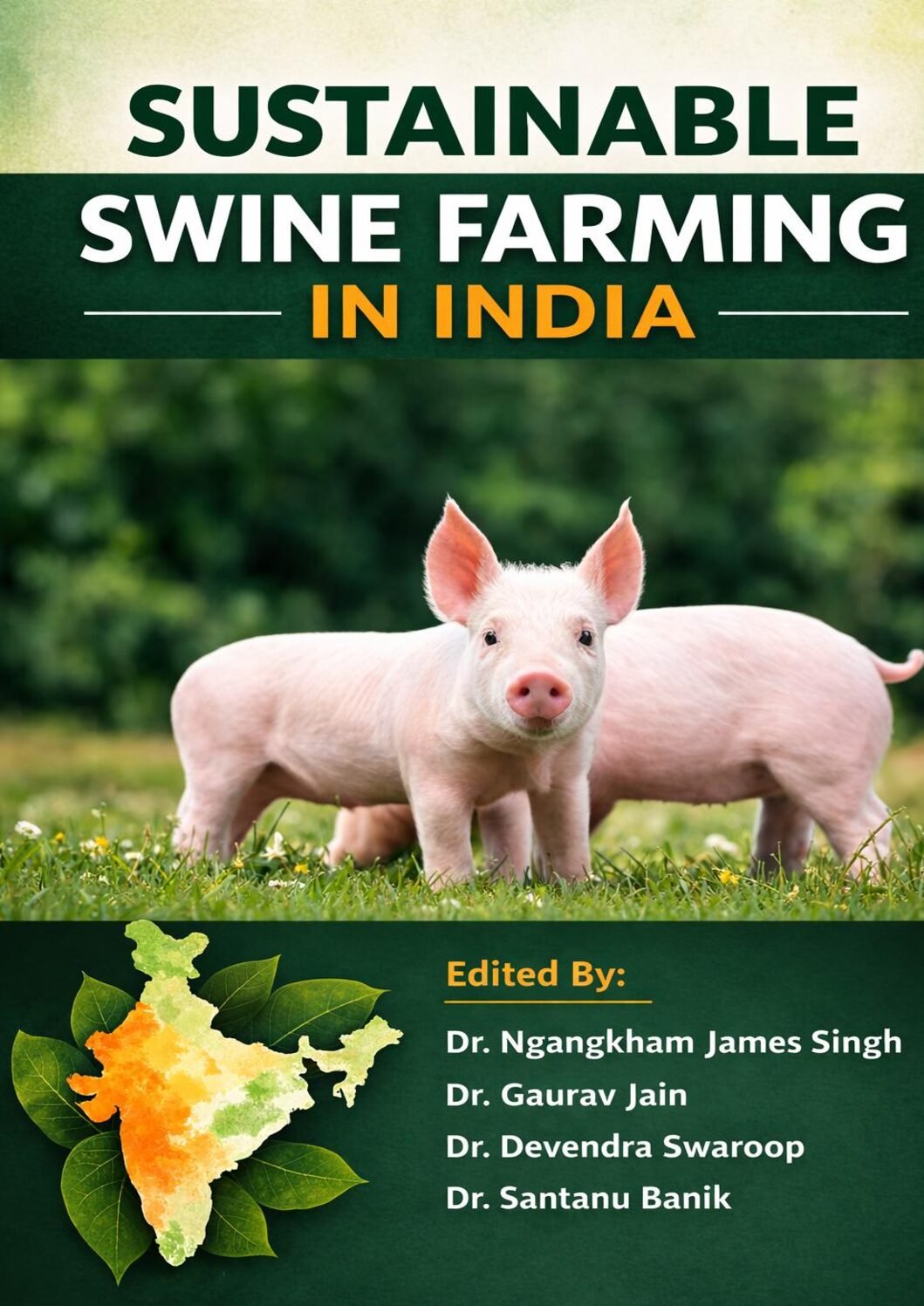
Sustainable Swine Farming in India
₹850.00 ₹799.00
Swine farming is a crucial aspect of the global food industry, providing a significant source of protein worldwide. It has been a part of human civilization for thousands of years, with evidence of pig domestication dating back to around 7,000 BC. Despite its long history, pig farming has continued to evolve over the years, with new technologies, management practices, and breeding techniques emerging to improve productivity and sustainability. India is basically a rural oriented and agriculture-based country with around 70% rural population. Livestock sector is a vital source of economic assistance to agriculture and greatly contributes to national income. Today, pig farming is a complex and multifaceted industry, with a range of production systems, breeds, and management practices that farmers can adopt. It also plays a significant role in the global economy, with pork being the most widely consumed meat in the world.
Reviews
There are no reviews yet.